
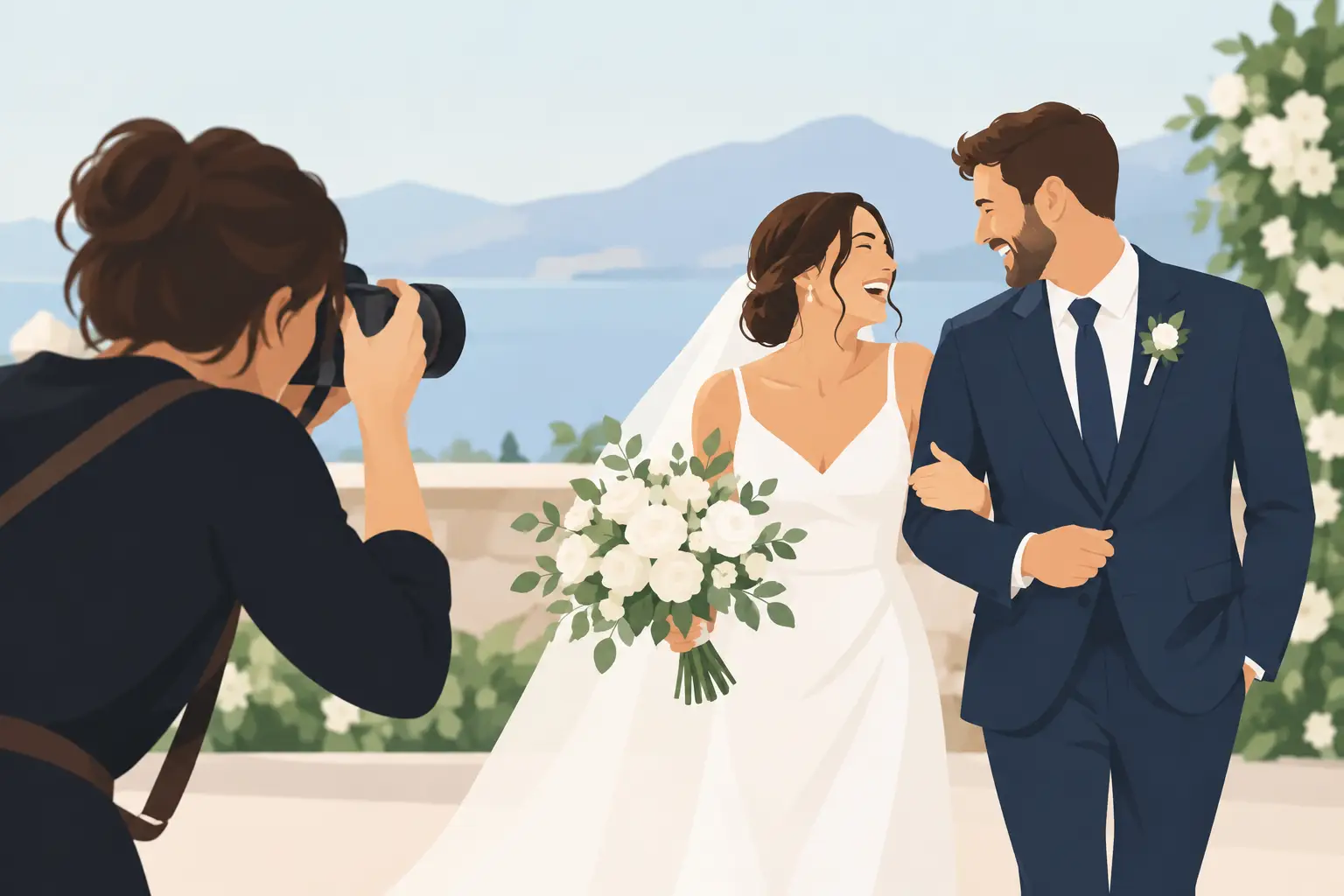
What Makes Candid Wedding Photos Feel Real?
A bride’s mother reaches for her hand while the dress is being buttoned. Two friends lean together during a toast, already laughing before the punch line lands. A grandfather watches the first dance from the edge of the floor, quietly taking it all in. These are the moments people mean when they ask what makes candid wedding photos so meaningful.
A candid image is not simply an unposed photo. It is a photograph that holds a real reaction, relationship, or feeling without asking anyone to perform it for the camera. The best ones bring couples back to the parts of the wedding day they felt too busy, excited, or emotional to fully see at the time.
What Makes Candid Wedding Photos Last?
Candid wedding photographs work because they show the life happening around the planned events. Formal portraits matter. They give you the beautiful, frame-worthy record of who was there and how everyone looked. But candid images provide the movement between those portraits: the deep breath before a ceremony, a child’s determined dance moves, the squeeze of a hand beneath the table.
The difference is emotional truth. A perfectly styled photo can be gorgeous, but a candid photograph becomes unforgettable when it captures an expression that could not be repeated exactly. The tears after a parent’s speech, the surprised glance during a first look, and the shared laugh after something goes slightly off schedule are all honest pieces of your story.
That does not mean candid photography is accidental. It takes awareness, preparation, technical skill, and a photographer who knows when to step closer and when to give a moment space.
Comfort Comes Before the Camera
The strongest candid photos begin with trust. Most people are not used to having a camera nearby for an entire day, especially during emotional moments. If a photographer arrives as a stranger, gives little direction, or makes every interaction feel like a photo opportunity, guests can become self-conscious.
A calm, approachable photographer changes that energy. By learning what matters to the couple, meeting key family members, and explaining the flow of the day, the photographer becomes a reassuring presence rather than a distraction. People relax. They stop checking whether they are being photographed and return to celebrating naturally.
This is especially helpful for couples who say they are nervous in front of the camera. You do not need to be effortlessly photogenic or spend your day pretending not to notice the lens. A good photographer offers gentle direction for portraits, then creates enough comfort that the unplanned moments can unfold honestly.
At Victor’s Photos & Video, that personal connection is part of the planning process. Knowing which relationships, traditions, and little details matter most helps the team recognize the meaningful moments as they happen.
Presence Without Interruption
There is a balance to candid coverage. Some moments benefit from a photographer staying back and using a longer lens, such as a private exchange between a parent and child or an emotional ceremony reading. Other moments call for being close enough to feel part of the action, particularly on a packed dance floor or during the celebration after the ceremony.
Neither approach is right all day. A photographer who stays too far away may miss the intimacy of a moment. One who is always close can change the atmosphere. Experience is knowing the difference and moving with purpose.
Timing Is the Invisible Skill
A candid image often happens in a fraction of a second, but getting it takes anticipation. Experienced wedding photographers watch for the beginning of a reaction, not just the obvious peak. They see a best man take a breath before a speech, notice a flower girl becoming restless, or recognize when a couple is about to turn toward each other after being announced into the reception.
This is why full-day awareness matters. Some of the most memorable images are not on the timeline. They occur while guests arrive, while the wedding party waits outside the ceremony, or while family members hug after the formal portraits are finished.
A photographer also needs to understand the rhythm of a wedding. During the ceremony, discretion is essential. During cocktail hour, there is often rich interaction among guests who have not seen each other in years. During dinner and dancing, expressions change quickly under more challenging lighting. Each setting requires a different approach, but the goal remains the same: preserve the feeling without staging it.
Looking Beyond the Couple
Your wedding day is centered on the two of you, but your complete story includes everyone who came to celebrate. Meaningful candid coverage follows the couple and also notices the people who shaped their lives.
A thoughtful photographer looks for parents watching from across the room, siblings helping with last-minute details, grandparents enjoying a favorite song, and friends who bring energy to the reception. These images often become more valuable with time because they preserve relationships in a way no group portrait can fully express.
If there are specific people or family dynamics that matter to you, share that during planning. You do not need to hand over a rigid shot list for every spontaneous moment. Simply letting your photographer know that a grandparent, longtime friend, or cherished family tradition is especially important gives them helpful context.
Light, Composition, and the Details That Set a Photo Apart
Emotion is the heart of a candid image, but craft is what allows that emotion to be seen clearly. Wedding days move through bright windows, shaded gardens, dim churches, banquet halls, and dance floors lit by colored DJ lights. A photographer must adapt quickly while protecting the natural mood of the moment.
Good candid photography uses available light when it feels flattering and true to the scene. It also uses professional lighting when needed so faces remain visible and images do not become dark, grainy, or harsh. Reception lighting is a common example. The room should still look like your reception, not a studio set, but the people and their expressions should be captured beautifully.
Composition matters just as much. An expert photographer notices distracting backgrounds, watches for clean angles, and frames a scene so your eye goes directly to the emotion. A quick hug can look ordinary if it is photographed from the wrong position. From the right vantage point, with a parent’s expression visible over a shoulder or guests softly blurred behind them, it becomes a photograph with real depth.
Candid Does Not Mean Careless
Some couples worry that requesting candid photography means receiving a collection of random snapshots. It should not. The strongest galleries feel natural while still being intentional, polished, and consistent.
A professional candid photograph is carefully exposed, thoughtfully composed, and edited to reflect the color and atmosphere of the day. It may look effortless, but that ease comes from preparation and attention. Reliable equipment, backup plans, knowledge of the venue, and clear coordination with your videography team all help protect the moments that only happen once.
There is also room for artistry. Reflections in a window, the foreground of a floral arrangement, a glimpse of a celebration through a doorway, or a wide scene that shows the scale of the reception can make candid images feel more immersive. The creative choices should support the moment, not overpower it.
Creating Space for Genuine Moments
Couples can help make room for better candid photography without turning their wedding into a photo shoot. Build a realistic timeline so you are not rushing from one event to another. Give yourselves a few quiet minutes after the ceremony or first look. Consider seeing each other before the ceremony if it allows more time with guests later, though that choice depends entirely on your preferences and traditions.
Most importantly, stay present. Let yourselves laugh loudly, hug your people, dance, and take in the room. Do not feel pressured to look toward the camera every time you notice it. Your photographer is there to document the day you are living, not pull you away from it.
The photos that stay with you years later may not be the ones you expected to love most. They may be the glance between your parents, your friends singing every word to a song, or the way your partner looked at you when no one asked them to pose. Give those moments room to happen, and they will tell the truest story of your celebration.
