
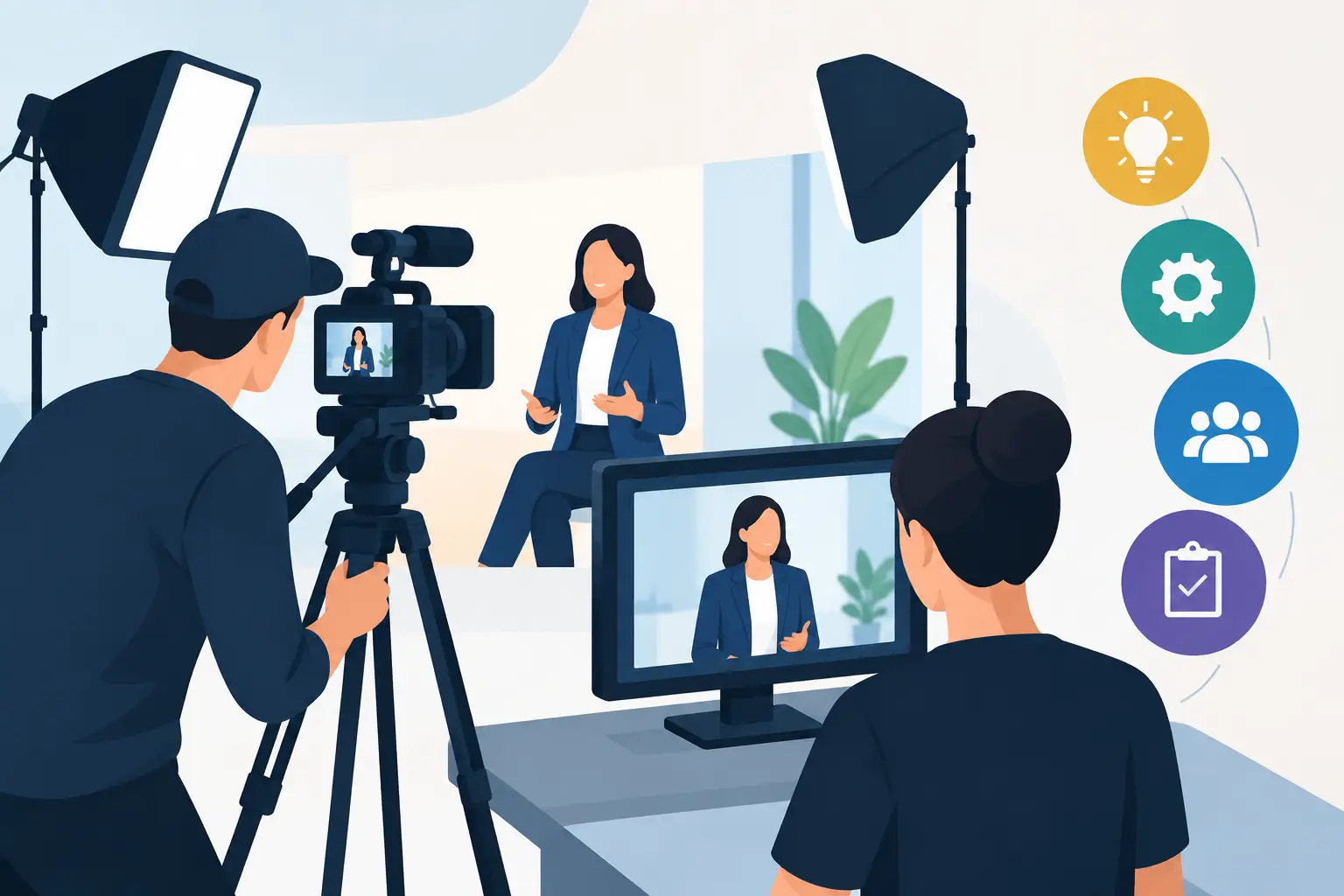
Commercial Video Production Review: What Matters
A promotional video can look polished and still miss the point. A commercial video production review should look beyond attractive shots to ask whether the message is clear, the people on camera feel credible, and the finished piece gives viewers a reason to take the next step. For Connecticut businesses, that difference affects whether a video becomes a valuable sales and marketing asset or simply another file that sits unused.
Whether you are planning a company profile, employee training series, customer story, event recap, product demonstration, or aerial property video, the right production partner helps you turn an idea into something people can understand and remember. The review process begins well before cameras arrive.
What a Commercial Video Production Review Should Cover
A useful review is not just about a production company’s showreel. A reel should demonstrate visual skill, but it is naturally made up of the strongest few seconds from many different projects. Ask to see complete examples that resemble your project in purpose and scale. A two-minute brand film, for example, has different demands than a training video that must explain a process accurately from beginning to end.
Look for thoughtful pacing, clean audio, confident interviews, natural lighting, and editing that supports the message rather than distracting from it. Pay attention to the opening moments. Does the video quickly establish who it is for and why the viewer should care? If the subject is a local business owner, does the production make that person sound like themselves, or does it feel overly scripted and distant?
A strong commercial video should also be appropriate for where it will be used. A video designed for a website may need a clear overview and longer attention span. Social media often calls for shorter versions, captions, and a compelling first few seconds. A presentation or trade-show video may need to communicate its value even when the room is noisy. Good production is not one-size-fits-all.
Start With the Business Goal, Not the Camera Package
Professional cameras, drones, lighting, and sound equipment matter. They help create a polished result and protect the production from avoidable technical problems. But equipment alone does not create a useful marketing video.
Before reviewing estimates or visual samples, define the job the video needs to do. A medical practice may want to build trust before a patient’s first appointment. A construction company may need to show the care behind its work. A manufacturer might need a training video that reduces repeated questions and supports safer procedures. Each goal changes the story, the interview questions, the locations, and the editing approach.
It also changes how success should be measured. A recruitment video may be judged by stronger candidate interest. A sales video may support more qualified conversations. An internal training program may save time for managers. Not every project needs a dramatic campaign-level concept, but every project should have a clear purpose.
This is where a collaborative producer earns trust. They should ask who the audience is, what the audience needs to know or feel, and what action should follow. They should also be willing to offer ideas when your team has expertise in the business but not in video production.
Review the Planning Process Carefully
The smoothest productions are usually the ones that were planned with care. Your production partner should explain what happens before filming, on the shoot day, and during editing. Clear communication is especially valuable when several employees, locations, or approvals are involved.
Pre-production may include a creative discussion, a project outline, interview preparation, location planning, a shot list, and a schedule. For a straightforward testimonial, this can be simple. For a multi-location corporate video or live stream, it may require more detailed coordination. The appropriate level of planning depends on the project, but vague answers about timing and deliverables are a warning sign.
Ask who will guide people on camera. Most business owners and employees are not professional presenters, and they should not be expected to perform like they are. A caring, experienced videographer can make a significant difference by offering gentle direction, choosing a comfortable setting, and allowing people time to settle in. The goal is a natural, confident presence, not a memorized sales pitch.
You should also discuss access and practical details early. Is there enough quiet space for an interview? Will the team need permission to film at a customer site? Are branded uniforms, signage, or product samples available? A few thoughtful preparations protect the final result.
Sound, Lighting, and Interviews Reveal Professional Care
Viewers will forgive a quick cut more readily than hard-to-hear audio. For interview-led video, clean sound is essential. Listen closely to samples for echo, traffic noise, air-conditioning hum, or music that overwhelms the speaker. Professional microphones and careful monitoring are not glamorous, but they preserve the confidence and authority of the person speaking.
Lighting deserves the same attention. Natural window light can be beautiful, but it changes throughout the day and can create difficult contrast. A trained crew knows when to work with available light and when to add lighting that makes a person, product, or workspace look its best. The result should feel true to your business, not harsh or artificially staged.
Interview quality is another meaningful test. Strong questions draw out specific stories instead of generic claims. Rather than asking a business owner to say they provide excellent service, a producer may invite them to describe the moment they realized a customer needed extra help. Details like that create credibility because they sound human.
Compare Deliverables, Ownership, and Editing Expectations
Two proposals with similar filming hours can provide very different value. Read the deliverables closely. Confirm the number and length of final videos, whether short social cuts are included, the format of the files, and whether captions or graphics are part of the scope. If aerial footage is important, confirm that the operator is properly vetted and that the flight plan suits the location and conditions.
Editing is where the story takes its final shape. Ask how feedback works and how many rounds of revisions are included. A reasonable revision process gives your team a chance to correct facts, refine wording, and ensure the video reflects the brand. At the same time, major changes after approval of a concept or script can affect cost and schedule. Clear decisions early help everyone stay on track.
It is also wise to discuss music licensing, usage rights, and the ownership or access you will have to final files. A professional partner should explain these points in plain language. You should know exactly what you are receiving and how your organization can use it.
Price Is Part of the Review, Not the Whole Decision
Budget matters, and an honest production company will help you prioritize. A smaller crew and focused shoot may be the right choice for a simple staff introduction or service overview. A larger project with several locations, interviews, original graphics, drone footage, and multiple edits will require more time and investment.
The lowest quote is not always the best value if it leaves out audio support, planning, revisions, or the versions you need for different platforms. On the other hand, not every project needs a large-scale production. The best plan is the one that puts resources behind the moments that will carry your message.
At Victor’s Photos & Video, commercial work is approached with the same personal attention given to life’s most meaningful celebrations: listen first, plan carefully, and create images that genuinely reflect the people and purpose behind the project. For businesses throughout Connecticut, that owner-led communication can make the process feel far less intimidating.
Questions Worth Asking Before You Commit
A conversation should leave you with a clear sense of how the project will move forward. Ask how the team develops a concept, what they need from your staff before filming, who will be present on shoot day, and how they handle unexpected schedule changes. Ask to see work similar to yours and to hear how they helped that client solve a communications challenge.
You can also ask what makes a project successful in their view. The best answer will not be limited to camera settings or cinematic shots. It will connect craft with the audience, the message, and the practical result your business hopes to achieve.
A commercial video is an opportunity to let customers meet the people behind your work before they pick up the phone, visit your location, or request a proposal. Choose a team that treats that opportunity with care, and your video can continue telling your story long after the filming day has ended.
