
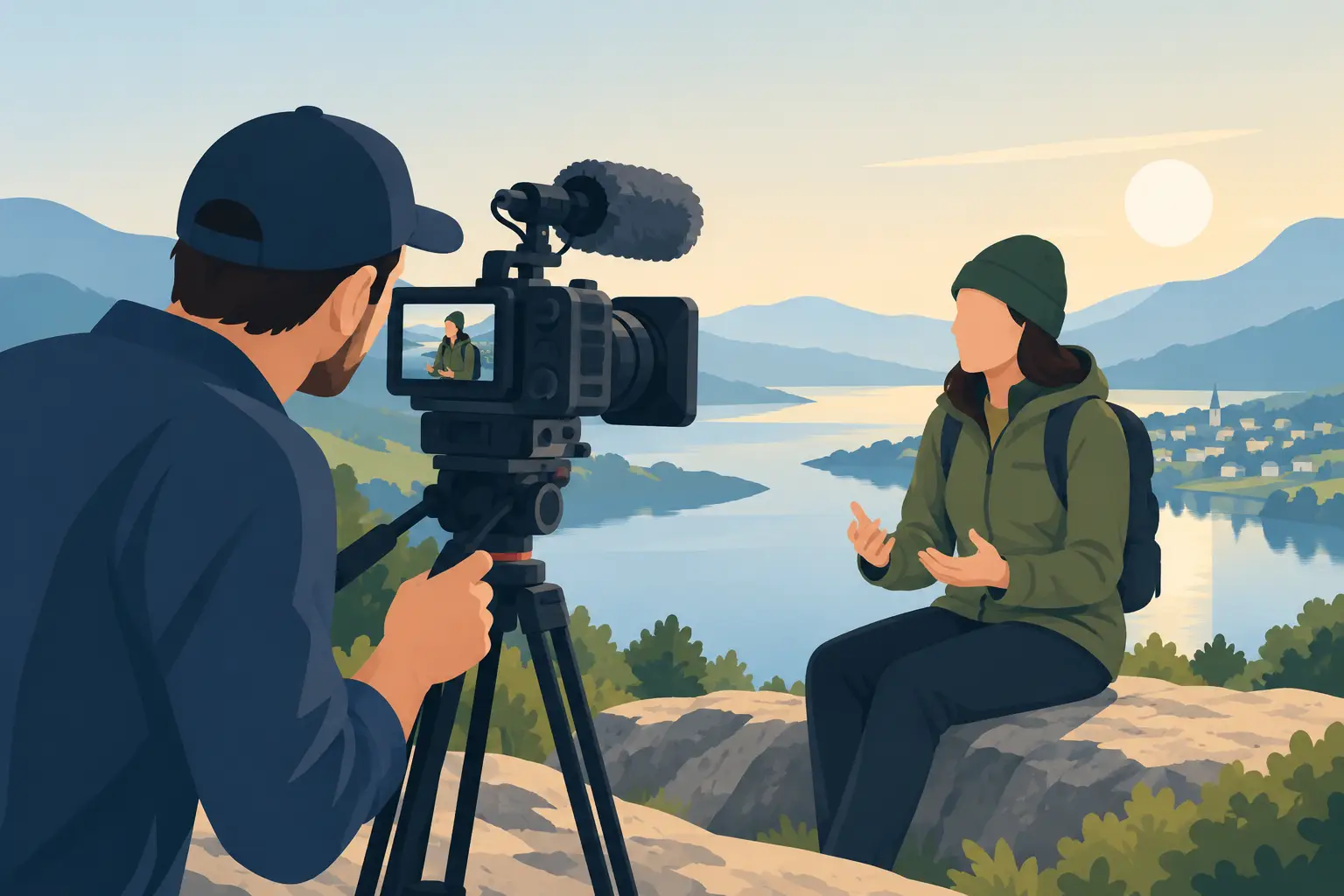
Documentary Video Production That Feels True
A founder explains why her company began. A nonprofit volunteer describes the person who changed his life. A family watches an aging relative share a story that has never been recorded before. These are not moments that need to be manufactured. They need to be noticed, heard clearly, and shaped with care.
That is the heart of documentary video production. It creates a lasting record from real voices, real places, and real experiences. For Connecticut organizations, businesses, and families, a well-made documentary can preserve what matters while helping others understand why it matters.
What Makes Documentary Video Production Different?
A documentary is not simply a collection of interviews set to music, and it is not a commercial with a more serious tone. Its purpose is to reveal something true. The story may center on a business, a community organization, a milestone event, a local place, or a family history, but the strongest films let people speak in their own words.
That authenticity takes more preparation than many people expect. A polished documentary still needs a clear point of view, thoughtful questions, professional lighting, clean sound, and purposeful editing. The difference is that the production team is listening as much as it is directing.
For a business, that may mean sharing the origin of the company through the people who built it and the customers it serves. For an organization, it may mean showing the impact behind a mission through firsthand stories. For a family, it can mean preserving the expressions, voices, laughter, and memories that photographs alone cannot hold.
The goal is not perfection. It is connection.
Start With the Story You Want People to Carry Forward
Before cameras are set up, determine what the viewer should understand or feel when the film ends. This is not the same as writing every line of dialogue. Documentary work needs room for genuine answers and unexpected moments. Still, a clear focus keeps the production from becoming a beautiful but scattered collection of footage.
A local manufacturer might want to show the pride and precision behind its work. A healthcare practice may want patients to feel reassured by the people behind the care. A family may want to honor a grandparent’s life through childhood stories, old photographs, and conversations with loved ones.
A useful starting point is a simple sentence: “We want viewers to see that…” Finish that thought honestly. “We want viewers to see that our organization gives young people a safe place to grow.” “We want viewers to see the care behind our handmade products.” “We want our children and grandchildren to know where our family came from.”
That sentence guides the interview questions, filming locations, visual style, and final edit.
Find the Right Voices
The best interview subject is not always the person with the most impressive title. It is the person with an honest, specific perspective. A longtime employee may recall the early days of a company better than anyone else. A client may explain an organization’s impact in a way that statistics never could. A sibling might tell the story that brings a family tribute to life.
It helps to choose a small group of voices with different roles in the story. Too many interviews can dilute the message and leave little space for each person to be heard. In many short documentaries, three to five strong voices are more effective than ten brief comments.
People should never feel pressured to perform. An experienced interviewer creates a comfortable setting, asks open questions, and gives the subject time to think. Often, the most meaningful answer comes after a pause.
Plan the Production Without Over-Scripting It
Documentary filming works best when it is organized but flexible. The team should know where to film, who will be featured, what activities may be happening, and which visual details support the story. At the same time, real life does not follow a shot list exactly.
If a business is being filmed, the production may include employees at work, customer interactions, close-ups of materials or products, and the environment that gives the company its character. For a nonprofit or community piece, the crew may capture programs in action, volunteers connecting with participants, and the surrounding neighborhood. For a personal legacy film, the setting might be a favorite home, family gathering place, or meaningful Connecticut location.
A thoughtful plan also protects the interview experience. Schedule enough time so that no one feels rushed. Choose a quiet location with minimal background noise. Make sure participants know what to expect, but avoid giving them a script to memorize. Rehearsed language can sound less believable than a natural conversation.
At Victor’s Photos & Video, this kind of preparation is paired with a personal approach. The goal is to make people comfortable in front of the camera while staying alert to the candid moments that give a story its life.
Sound Is Where Trust Begins
Viewers will forgive a shot that is slightly imperfect. They rarely forgive audio they cannot understand.
Clear, consistent sound is one of the most valuable parts of documentary video production. Interviews need professional microphones, careful monitoring, and a filming location that limits distractions such as HVAC noise, traffic, kitchen activity, or echo. If a subject’s voice is the emotional center of the film, it deserves to be captured with the same care as the image.
Natural sound also adds texture. The hum of a workshop, applause at a community event, footsteps in a hallway, children laughing during a program, or the quiet rustle of old photographs can make a video feel present and human. These details should support the story, not overpower it.
Music can help establish pace and emotion, but it should not tell viewers what to feel at every second. A restrained music track leaves room for real voices and real moments to do their work.
Show the Details That Make the Story Believable
Interview footage gives a documentary its words. Supporting footage gives those words proof, movement, and atmosphere.
When someone says a team cares deeply about its customers, show the careful interaction. When a family member talks about a treasured recipe, show the hands preparing it. When a business owner describes the place where it all began, include the storefront, the neighborhood, and the familiar routines that make the location meaningful.
This visual material is often called B-roll, but it should never feel like filler. Every shot should answer a quiet question from the viewer: What does this look like? Who is involved? Why does it matter? How does it feel to be there?
Drone footage can be useful when a setting is part of the story, such as a campus, property, waterfront location, or event venue. But it is not automatically the right choice. Aerial images should add context, not distract from the people at the center of the film.
Editing Turns Footage Into a Story
The editing room is where interviews, candid moments, archival photos, music, natural sound, and visual details become one experience. This stage requires judgment. A meaningful documentary cannot include every good answer or every attractive shot.
The editor must choose what moves the story forward. Sometimes the strongest opening is a powerful quote. Other times, it is a quiet visual moment that creates curiosity before anyone speaks. The pacing depends on the intended audience and purpose. A two-minute brand story for social media needs focus and momentum. A family legacy film may deserve more space for memories, pauses, and full conversations.
There are trade-offs. A shorter video is easier for busy viewers to watch and share, but it may leave out valuable context. A longer film can create deeper emotional impact, but only if each scene earns its place. In some cases, producing both a main documentary and shorter clips is the most practical approach.
Captions are also worth considering, especially for marketing, training, social media, and public-facing content. They improve accessibility and make the story easier to follow when viewers are watching without sound.
Give the Finished Film a Purpose
A documentary should have a home before the final cut is delivered. Will it play at a fundraiser, live on a company website, support a sales presentation, introduce a training program, or become a private family keepsake? The answer affects length, format, graphics, and how the story is structured.
For businesses, the right documentary can build confidence before a first conversation. It shows the people, values, and care behind the service. For organizations, it can help supporters understand the human impact behind the mission. For families, it becomes part of the record passed from one generation to the next.
The most memorable documentary films do not chase a trend or force a message. They make room for people to be themselves, then preserve that truth with skill. When a story is worth telling, give it the time, attention, and care it deserves.
