
What to Wear for Headshots That Feel Like You
A strong headshot can open a conversation before you ever walk into the room. It might be the image on your LinkedIn profile, company website, speaker bio, business card, or real estate listing. If you are wondering what to wear for headshots, the best answer is not simply “dress professionally.” Wear something that reflects who you are at your best: comfortable, confident, and ready to be trusted.
The camera notices details, but it should never distract from the person in the frame. Your clothing should support your expression, posture, and personality rather than compete with them. A polished headshot is not about becoming someone else for the day. It is about presenting the professional, approachable version of yourself that clients, colleagues, and future opportunities deserve to meet.
Start With the Message You Want Your Headshot to Send
Before choosing a shirt, dress, blazer, or jacket, think about where the image will appear and who will see it. A financial advisor, attorney, healthcare professional, creative director, entrepreneur, and actor can all need headshots, but the right wardrobe will look different for each person.
Ask yourself how you want someone to feel when they see your photo. You may want to appear established and authoritative, warm and accessible, artistic and energetic, or calm and detail-oriented. There is room for personal style, especially when your work depends on building genuine relationships. Still, your look should make sense for your field and the audience you hope to reach.
For a corporate website or executive profile, a tailored blazer, structured dress, button-down shirt, or simple blouse often creates a professional foundation. If your brand is more relaxed, such as a small business owner, designer, coach, or creative professional, refined casual clothing may feel more authentic. Think elevated, not overdressed: a quality knit top, a clean jacket, or a polished overshirt can photograph beautifully when it fits well.
What to Wear for Headshots: Fit Comes First
The most expensive outfit in the world will not photograph well if you feel restricted, uncomfortable, or unlike yourself in it. A headshot session asks you to move, sit, stand, turn your shoulders, and smile naturally. Clothing that pinches at the neck, rides up at the shoulders, or pulls across the chest can show up in your body language.
Choose pieces that fit your current body comfortably. This is not the day to rely on an outfit you are hoping to fit into soon or a jacket that only works when you stand perfectly still. Try everything on a few days before your session. Lift your arms, sit down, and look at the neckline and shoulders in a mirror. If you keep adjusting something, you will probably keep adjusting it during photos.
Tailoring makes a meaningful difference, particularly with blazers, dresses, and button-down shirts. Clean lines around the shoulders and torso help create a composed shape in the frame. Avoid clothing that is excessively baggy or extremely tight. Both can pull attention away from your face, which should remain the center of every headshot.
Choose Colors That Keep the Attention on You
Solid colors are usually the safest and most versatile choice for professional headshots. They create a clean visual foundation and allow your eyes, smile, and expression to take the lead. Mid-tone colors often work especially well because they provide definition without appearing harsh.
Navy, charcoal, soft blue, deep green, burgundy, plum, rust, and rich neutrals can be excellent options. Cream, light blue, blush, and softer earth tones may also photograph beautifully, depending on your skin tone and the background. Black can look sophisticated, but it sometimes loses detail against a dark background. If black is a favorite, consider adding a layer or selecting a backdrop that provides separation.
Bright neon shades can reflect color onto the skin, while stark white can occasionally appear too bright under studio lighting. That does not mean you must avoid white entirely. A white shirt under a navy jacket, for example, is a classic, polished combination. The goal is balance.
When in doubt, hold the garment near your face in natural light. Does it make your complexion look lively and rested, or does it emphasize under-eye shadows and redness? The answer is usually clear. A professional photographer can also help you choose a background and lighting setup that complements your wardrobe.
Patterns, Logos, and Texture
Small, busy patterns can look distracting or create visual distortion on camera. Tiny stripes, tight checks, herringbone, and repetitive prints may not translate as cleanly as they do in person. Large graphic prints, prominent logos, and text can also date a headshot quickly or redirect attention away from your face.
That said, clothing does not need to be plain or lifeless. Texture adds depth. A subtle knit, linen blend, matte silk, tweed, or softly textured blazer can make an image feel more dimensional without becoming distracting. If you love pattern, choose one that is simple, intentional, and not too high-contrast.
Layers Add Polish and Give You Options
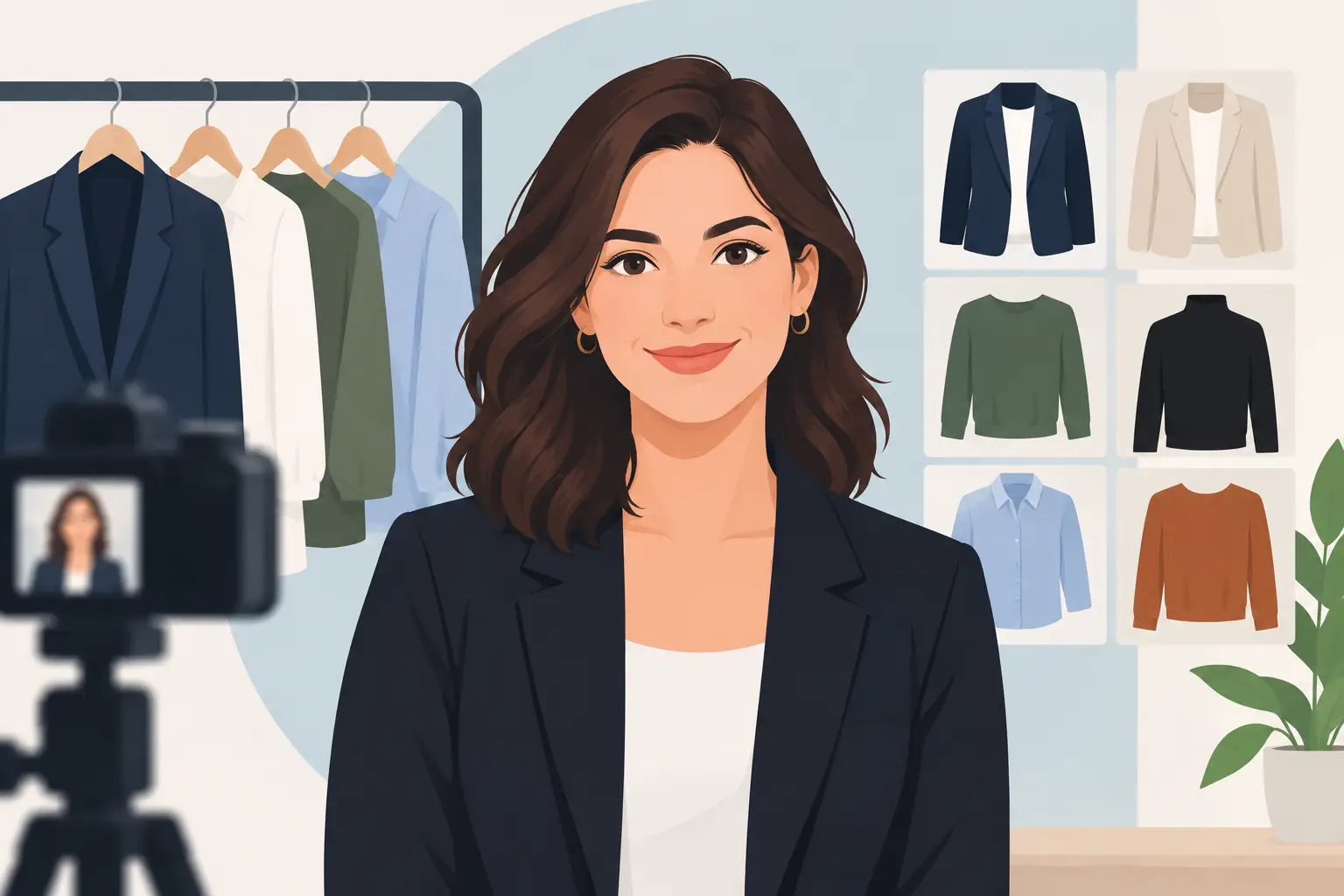
A thoughtful layer can instantly make a headshot look more complete. Blazers, jackets, cardigans, and overshirts create shape around the shoulders, which is helpful in a close crop. They also make it easy to create variety during one session without changing your entire outfit.
Bring two or three coordinated options if time allows. You might begin with a blazer over a blouse or button-down, then remove the jacket for a more relaxed look. A business owner may want one formal image for a corporate profile and one approachable option for social media or an About page. A small wardrobe change can provide both.
Keep your layers clean and wrinkle-free. Steam or press them ahead of time, and transport them on hangers when possible. Wrinkles become more noticeable under professional lighting, particularly around collars, sleeves, and the front of a jacket.
Let Accessories Support, Not Steal, the Frame
Accessories should feel like part of your everyday professional style, not a costume added for the camera. Simple earrings, a watch, a necklace, or a favorite pair of glasses can add personality and help you feel like yourself. The key is restraint.
Avoid oversized statement jewelry that reaches into the face area or makes noise and movement difficult. Very shiny pieces can catch light unexpectedly. If you wear glasses regularly, wear them for your headshot. They are part of how people recognize you. Just make sure the lenses are clean, and let your photographer know if glare is a concern so lighting can be adjusted.
For makeup, aim for a slightly more polished version of your usual look. Camera lighting can soften features, so a bit of definition around the eyes and face often helps. The goal is not heavy makeup. It is to look rested, confident, and recognizable when someone meets you in person.
Prepare the Details the Camera Will Notice
A successful session starts before you arrive. Give yourself enough time to get ready without rushing. Check for lint, loose threads, pet hair, stains, chipped nail polish, and clothing tags that may peek out as you move. Bring a lint roller, tissues, and any touch-up items you normally use.
Consider your neckline carefully. It will be visible in nearly every final image. A crew neck, V-neck, collared shirt, scoop neck, or structured collar can all work well. Choose the one that feels flattering and appropriate for your role. Extremely low necklines or overly loose collars can pull focus, while high necklines can feel restrictive if they are not part of your natural style.
Haircuts, color appointments, and skincare treatments are best scheduled several days before the session rather than the night before. You want to arrive looking fresh, not like you are recovering from a new haircut or a reaction to a product. Get a good night’s sleep, drink water, and plan to arrive a few minutes early so you can settle in.
Coordinate Without Matching for Team Headshots
If your organization is photographing several people, consistency helps create a polished website or marketing piece. That does not require everyone to wear the same outfit. Instead, agree on a general level of formality and a complementary color range.
For example, a team might choose navy, gray, cream, soft blue, and muted green, with jackets optional. This approach keeps the group cohesive while allowing every person to look comfortable and individual. It is usually best to avoid having one team member in a formal suit while another arrives in a casual graphic T-shirt, unless that contrast is genuinely part of the company culture.
At Victor’s Photos & Video, we guide clients through these details before the session, because the right wardrobe decisions help create headshots that feel natural and work hard across every professional platform.
The Best Outfit Is One You Can Forget About
Once the camera is up, you should not be thinking about whether your shirt is wrinkled, your necklace is sitting straight, or your jacket feels too stiff. You should be focused on connecting, breathing, and letting your personality come through.
Bring choices, ask for guidance, and trust the preparation you have done. The best headshot outfit is not necessarily the most formal or fashionable one. It is the one that lets people see you clearly, confidently, and exactly as you want to be remembered.
